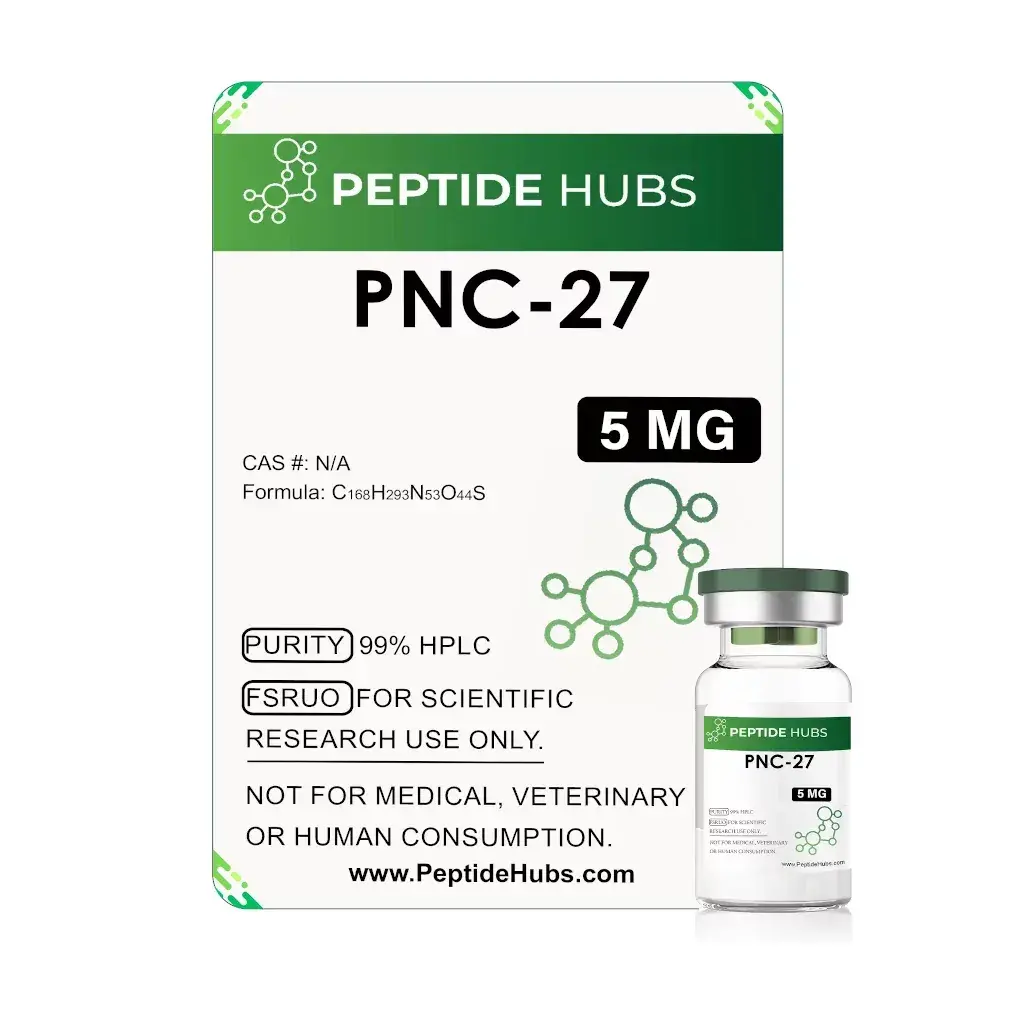
PNC-27 5 mg
Main Image

PNC-27 5 mg

Steroids Dragon Pharma Peptide

$26.40

PNC-27 5 mg – Anti-Cancer Research Peptide by Peptide Hubs

PNC-27 is a synthetic peptide composed of a p53-derived sequence linked to a membrane residency domain. It has been extensively studied in preclinical research for its highly selective cytotoxic effects on cancer cells without affecting healthy tissue. Offered by Peptide Hubs in a 5 mg/vial formulation (2 mL vial), PNC-27 is strictly intended for research use and is not approved for human consumption or therapeutic applications.

What is PNC-27?

PNC-27 is engineered to mimic a segment of the p53 tumor suppressor protein, combined with a membrane translocation sequence. This design enables it to bind to HDM-2 (Human Double Minute-2), a protein overexpressed in many cancer types, forming pores in cancer cell membranes and causing selective lysis. Research has shown that it targets malignant cells while sparing healthy ones, making it a fascinating subject in the field of experimental oncology.

As outlined in this PubMed-indexed study, PNC-27 has demonstrated promising results in vitro and in murine models by inducing necrosis of tumor cells through membrane disruption. While human studies are lacking, its tumor-specific affinity continues to fuel interest in labs studying novel anti-cancer pathways.

Mechanism of Action

PNC-27 works by targeting the HDM-2 receptor, which is upregulated in a variety of tumor types. Upon binding, it integrates into the cell membrane and initiates pore formation, ultimately leading to necrosis. This action is distinctly different from traditional chemotherapeutic agents, which affect both healthy and cancerous cells indiscriminately.
Dispatched within 24 hours in plain, discreet packaging.

Additional Information

Categories:
Brand: Dragon Pharma
Manufacturer: Dragon Pharma
Dosage Info: <div class="tab-pane fade" id="offer-tabbody--dosage-and-usage" role="tabpanel"> <section class="tab-panel" id="panel-usage"> <h2>Dosage &amp; Usage Guidelines</h2> <p>In experimental setups, PNC-27 is typically administered at dosages ranging from 2 mg to 5 mg per week. It is often reconstituted with bacteriostatic water and delivered via intratumoral or systemic routes in research animals. It is <strong>not for human use</strong> and is labeled accordingly for laboratory settings only.</p> <h3>Stacking for Advanced Research Models</h3> <p>Researchers exploring synergistic peptide protocols may consider combining PNC-27 with compounds such as:</p> <ul> <li>Thymosin Alpha-1 – for immune modulation in tumor models</li> <li>Ipamorelin – for GH axis support in long-term research</li> <li>Melanotan 2 – being studied for pigmentation and photoprotection in skin cancer models</li> <li>CJC-1295 no DAC – a GH secretagogue for metabolic cofactor studies</li> </ul> <h3>Potential Side Effects (Observed in Research Models)</h3> <p>While no systemic toxicity has been noted in preclinical data, researchers have reported local reactions at injection sites in animal studies. Proper lab protocol and biosafety handling are essential. No known hepatotoxicity or cardiovascular strain has been reported in published literature to date.</p> <h3>USA Domestic Delivery &amp; Research Use Disclaimer</h3> <p>Peptide Hubs ensures quick and discreet <strong>USA domestic shipping</strong> of PNC-27 5 mg. This product is for licensed laboratories, research professionals, and educational institutions. For alternative therapeutic peptides, explore our catalog which includes BPC-157 and GHK-Cu.</p> </section> </div>
Reviews:
(0 customer reviews)

Technical Details

Peptide Type
Chimeric p53-Derived Peptide
Peptide Sequence
PPLSQETFSDLWKLLKKWKMRRNQFWVKVQRG
Peptide Length
32 Amino-Acid Residues
Terminal Form
H-PPLSQETFSDLWKLLKKWKMRRNQFWVKVQRG-OH
p53-Derived Domain
Human p53 Residues 12–26
Leader Domain
17-Residue Membrane Residency Peptide (MRP)
Molecular Formula
C₁₈₈H₂₉₃N₅₃O₄₄S
Molecular Weight
4032 g/mol
CAS Number
1159861-00-3
PubChem CID
16201774
Research Target
Membrane-Associated HDM-2 / MDM-2
Research Status
Experimental / Preclinical

Chat on WhatsApp