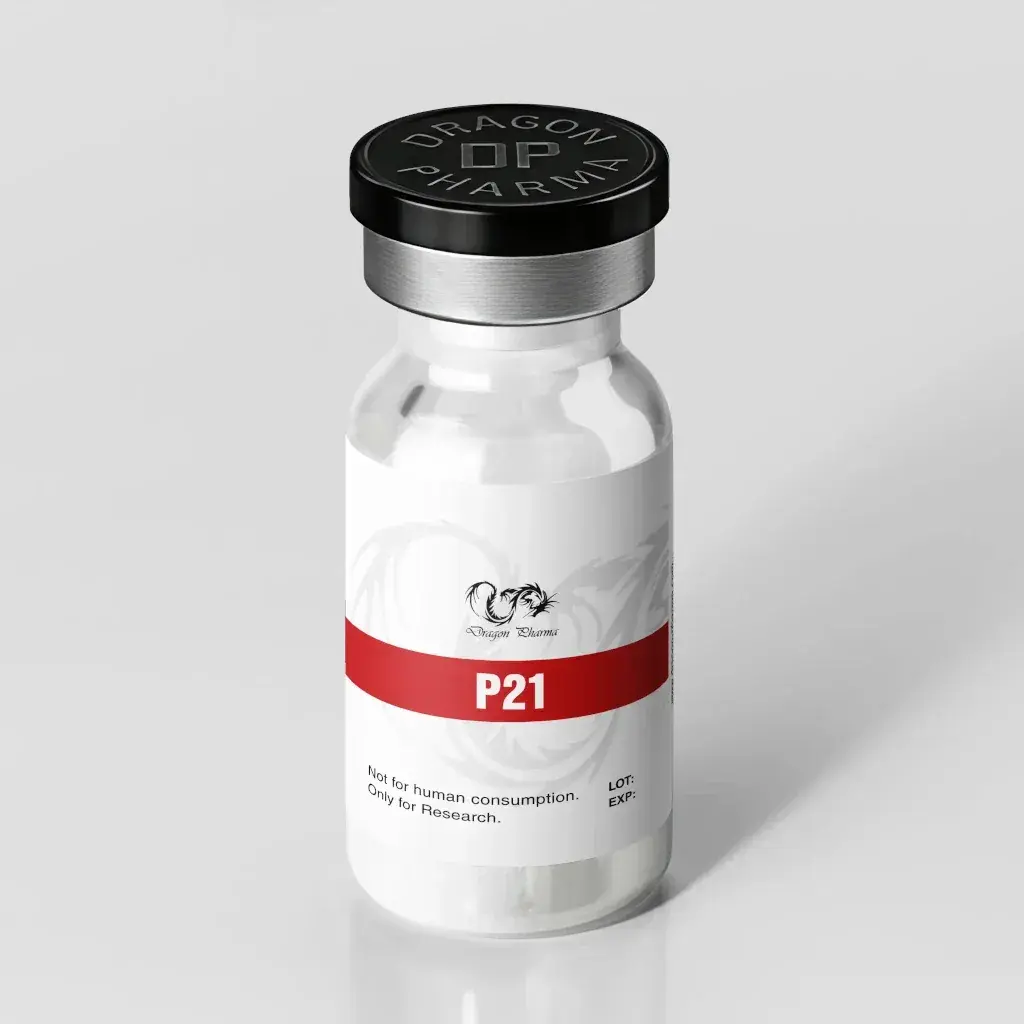
P21 5 mg
Main Image

P21 5 mg

Steroids Dragon Pharma Peptides

$70.00

Dragon Pharma P21 5 mg – Synthetic CNTF-Derived Peptide for Neurogenesis Research

✔ Synthetic lipophilic tetrapeptide ✔ Derived from ciliary neurotrophic factor (CNTF) ✔ Blood-brain barrier penetrant ✔ USA domestic shipping available

Dragon Pharma P21 5 mg is a synthetic, lipophilic tetrapeptide derived from ciliary neurotrophic factor (CNTF). This compound, also known as P021, has been designed to cross the blood-brain barrier and is studied in preclinical models for its potential to promote neurogenesis, increase brain-derived neurotrophic factor (BDNF) levels, and support synaptic plasticity in the context of neurodegenerative conditions such as Alzheimer's disease.

Each vial contains 5 mg of lyophilized P21 in a 2 mL format, requiring reconstitution with bacteriostatic water before use. The unique lipophilic properties of P21 enable effective CNS penetration, making it a valuable tool for investigating neuroregenerative mechanisms and cognitive function in research settings. For related research compounds, explore our peptides category and specifically Semax for complementary neuropeptide research applications.

What Makes P21 Valuable in Research?

P21 represents a focused approach to studying neurotrophic signaling and neurogenesis. By mimicking key functional domains of CNTF while maintaining a small, lipophilic structure, this peptide offers improved CNS bioavailability compared to larger neurotrophic factors. Its ability to enhance BDNF expression and support synaptic plasticity provides researchers with a tool to investigate the molecular pathways underlying learning, memory, and neural repair.

Researchers value P21 for its targeted mechanism and practical research applications. Its small size and blood-brain barrier penetration capabilities make it suitable for various experimental designs, from in vitro neuronal culture studies to in vivo models of cognitive function and neurodegeneration. For investigators exploring other neuroprotective compounds, DIHEXA 5 mg offers complementary research avenues in synaptic enhancement and cognitive function.

Current scientific literature on P21 and related neurotrophic peptides can be accessed through the PubMed database, where researchers can review peer-reviewed studies on its biological activity and experimental applications.

Key Research Applications for Dragon Pharma P21

  • ✔ Investigation of neurogenesis and neural stem cell differentiation
  • ✔ Evaluation of BDNF expression and signaling pathways
  • ✔ Research on synaptic plasticity and cognitive function
  • ✔ Studies of neurodegenerative disease models
  • ✔ Preclinical models of learning and memory enhancement
For Research Purposes Only

P21 5 mg is intended for research use only and is not approved for human consumption. Proper handling, reconstitution, and experimental protocols are essential for reliable results. For studies on neural repair mechanisms, BPC 157 provides additional research avenues in tissue protection and recovery.
Dispatched within 24 hours in plain, discreet packaging.

Additional Information

Categories:
Brand: Dragon Pharma
Manufacturer: Dragon Pharma
Dosage Info: <div class="tab-pane fade" id="offer-tabbody--dosage-and-usage" role="tabpanel"> <section class="tab-panel" id="panel-usage"> <h2>Dosage &amp; Usage Guidelines</h2> <div class="info-card warning"> <p><strong>For research and laboratory use only.</strong> Dragon Pharma P21 5 mg is a synthetic lipophilic tetrapeptide. Proper reconstitution, handling, and experimental design are essential for obtaining reliable data.</p> </div> <h3>Reconstitution Protocol</h3> <ul class="usage-highlights"> <li>✔ Use sterile bacteriostatic water for injection</li> <li>✔ Add appropriate volume to achieve desired concentration</li> <li>✔ Swirl gently to dissolve – do not shake vigorously</li> <li>✔ Store reconstituted solution at 2–8°C</li> </ul> <p>Reconstitute the lyophilized powder using bacteriostatic water to a concentration suitable for your research protocol. The 5 mg format allows for precise dosing across a range of experimental models. Always use aseptic technique during preparation to maintain peptide integrity.</p> <h3>Typical Research Parameters</h3> <p>In research settings, P21 is typically administered via subcutaneous or intraperitoneal injection. Dosing schedules and concentrations vary widely depending on the experimental design, animal model, and specific research objectives.</p> <ul> <li>✔ Commonly used in neurogenesis and cognitive function studies</li> <li>✔ Often combined with behavioral and molecular analysis</li> <li>✔ Used to investigate BDNF expression and synaptic plasticity</li> <li>✔ Research models include neurodegeneration and cognitive impairment paradigms</li> </ul> <h3>Factors to Consider in Research Protocols</h3> <ul> <li>Lipophilic properties facilitate blood-brain barrier penetration</li> <li>Reconstitution stability is limited; prepare fresh solutions for each use</li> <li>Individual variation in response may be observed across subjects</li> <li>Storage conditions significantly impact peptide stability</li> </ul> <div class="info-card"> <p><strong>Research note:</strong> P21 is derived from CNTF and designed to cross the blood-brain barrier. Its ability to promote neurogenesis and increase BDNF expression makes it a valuable tool for investigating neural plasticity, cognitive function, and potential therapeutic approaches in neurodegenerative disease research.</p> </div> </section> </div>
Reviews:
(0 customer reviews)

Technical Details

Compound Type
CNTF-Derived Peptidergic Compound
Structural Sequence
Ac-DGGLAG-NH₂
CNTF-Derived Region
Asp-Gly-Gly-Leu (DGGL)
Structural Modification
C-Terminal Adamantylated Glycine
Molecular Formula
C₂₇H₄₂N₆O₈
Molecular Weight
578.7 g/mol
CAS Number
1246751-68-7
PubChem CID
56589645
Parent Protein
Ciliary Neurotrophic Factor (CNTF)
Research Status
Experimental / Preclinical

Chat on WhatsApp