Dihexa 5 mg
$27.00
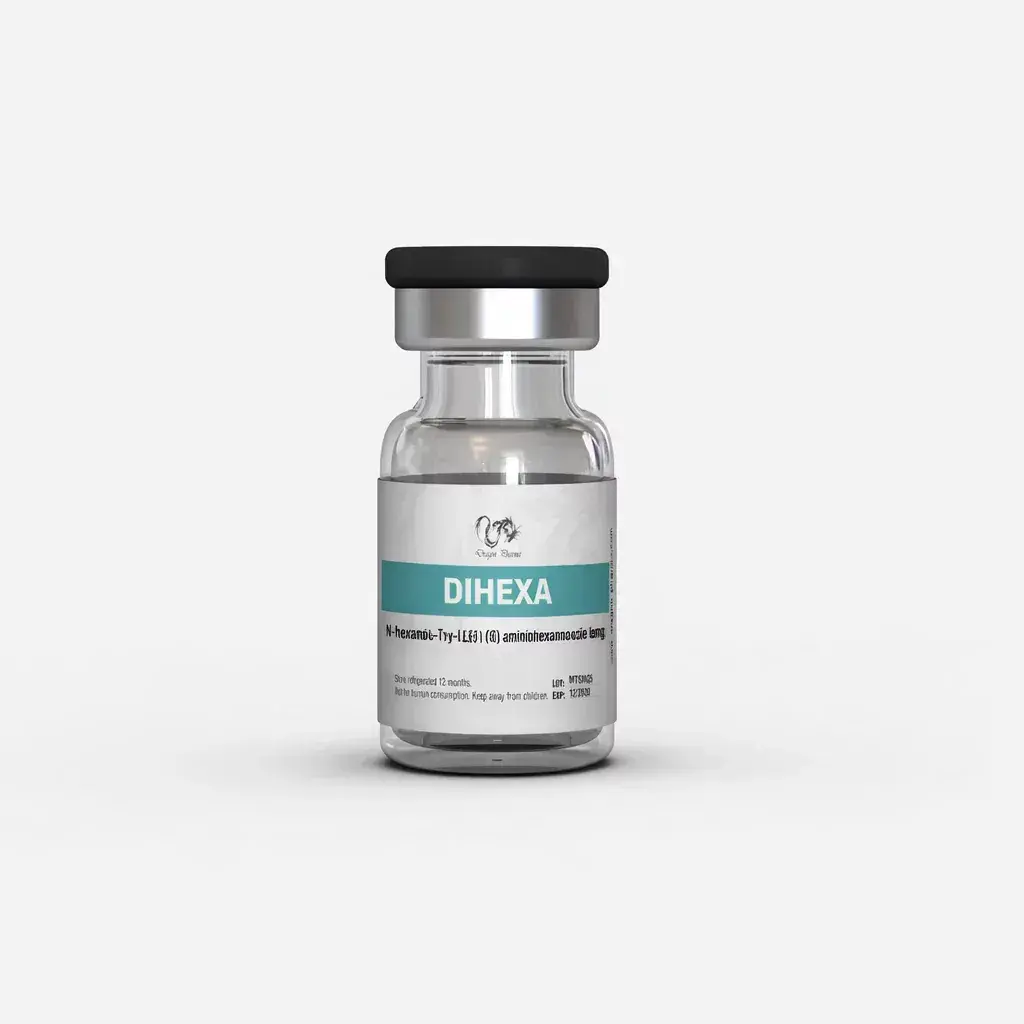
Dragon Pharma DIHEXA 5 mg – Advanced Nootropic Peptide for Cognitive Research
Dragon Pharma DIHEXA 5 mg is a research-grade peptide developed for scientific exploration of cognitive performance and neurological health. Chemically known as N-hexanoic-Tyr-Ile-(6) aminohexanoic amide, DIHEXA is a synthetic compound derived from the angiotensin IV pathway and designed to support advanced studies related to synaptogenesis and neural signaling.
Unlike many compounds commonly used in fitness research, DIHEXA 5 mg focuses on mechanisms associated with the central nervous system. Researchers have shown interest in this peptide due to its ability to cross the blood-brain barrier and interact with pathways connected to neuronal growth and repair. Because of this unique profile, Dragon Pharma DIHEXA has attracted attention in experimental studies investigating memory, cognitive resilience, and neuroprotective signaling.
Each vial contains 5 mg of high-purity lyophilized DIHEXA in a sterile 2 mL vial. The freeze-dried format ensures stability during storage and allows precise reconstitution for controlled laboratory protocols. Researchers interested in the biological mechanisms behind neural growth factors may also explore literature describing the HGF/c-Met signaling system, which is frequently discussed in relation to DIHEXA activity.
Effects
In laboratory research environments, DIHEXA has been investigated for its potential to support neural connectivity and brain signaling pathways. Studies suggest the compound may influence processes linked to synaptic formation and neuronal communication.
Because of these properties, research involving Dragon Pharma DIHEXA 5 mg often focuses on areas such as:
- Synaptic development and neural plasticity
- Cognitive signaling pathways
- Memory and learning mechanisms
- Neuroprotective responses under cellular stress
For athletes and fitness researchers, cognitive clarity and neural recovery are increasingly studied alongside physical performance. Compounds like DIHEXA may therefore be explored in broader research frameworks involving training adaptation and neurological recovery.