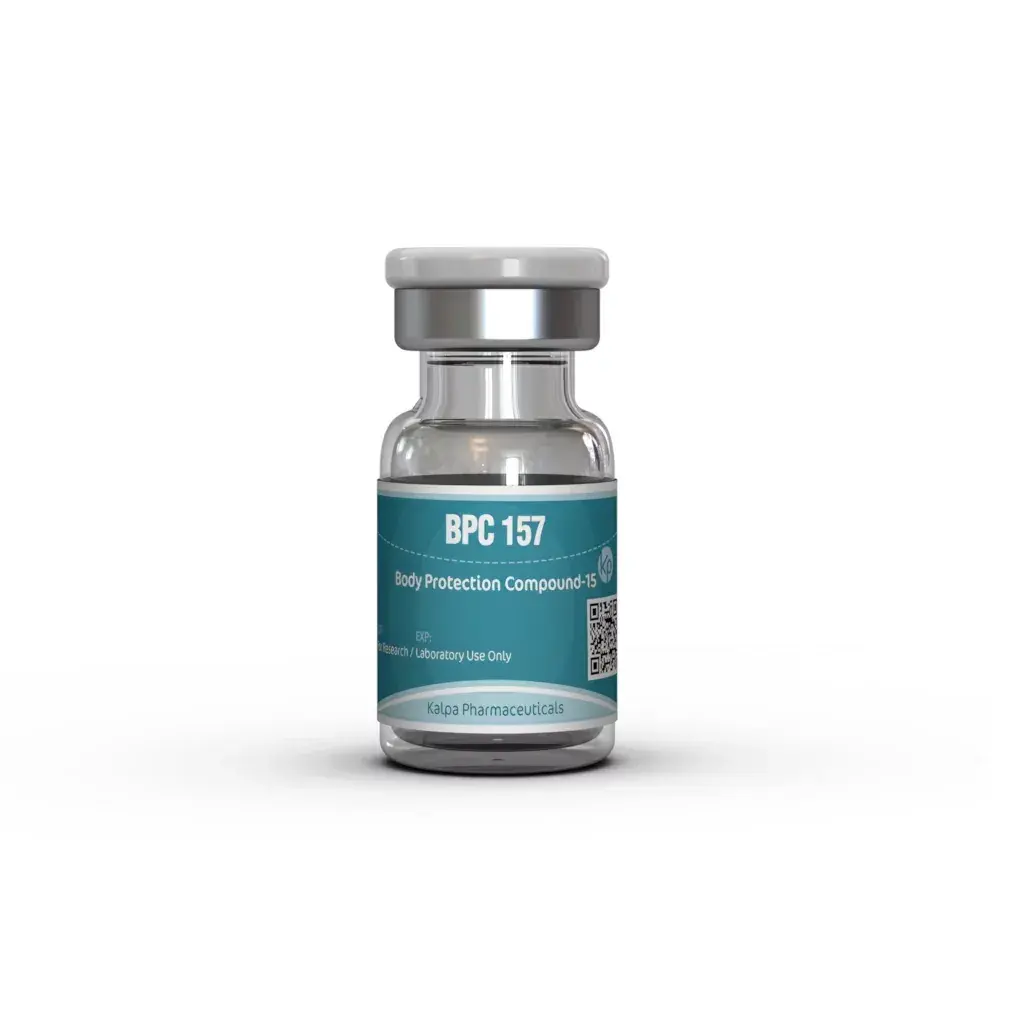
BPC 157 5 mg
$50.00
Kalpa Pharmaceuticals BPC 157 – Pentadecapeptide for Tissue Repair Research
Kalpa Pharmaceuticals BPC 157 5 mg is a synthetic pentadecapeptide derived from a protective protein found in the stomach. This research compound has gained attention for its potential role in accelerating healing of tendons, ligaments, and soft tissues. Each 2 mL vial contains 5 mg of lyophilized BPC 157, ready for reconstitution with bacteriostatic water for laboratory studies.
Bodybuilders and athletes interested in recovery research often turn to BPC 157 due to its proposed regenerative properties. Unlike anabolic steroids, this peptide works through localized and systemic pathways to support tissue repair, making it a unique subject for performance-related studies. For similar research products, explore TB 500 5 mg or GHK-CU 50 mg.
What Makes Kalpa Pharmaceuticals BPC 157 Unique?
Compared to other research peptides, Kalpa Pharmaceuticals BPC 157 offers a stable lyophilized format that maintains peptide integrity during transport and storage. The pentadecapeptide sequence is identical to the naturally occurring fragment, which is why researchers favor it for studies involving angiogenesis, tendon-to-bone healing, and gastrointestinal cytoprotection.
For those investigating recovery acceleration, this peptide is often compared to growth hormone secretagogues like Ipamorelin 5 mg. However, BPC 157 works through different mechanisms, primarily by promoting the formation of new blood vessels and modulating growth factor expression.
Benefits of Kalpa Pharmaceuticals BPC 157 for Research
- ✔ Supports soft tissue repair and tendon healing studies
- ✔ Lyophilized powder ensures long-term stability
- ✔ 5 mg dosage ideal for multi-day research protocols
- ✔ Suitable for injectable or oral administration research
- ✔ Can be combined with TB-500 for comprehensive recovery models
Kalpa Pharmaceuticals BPC 157 is intended for laboratory research only. Not for human consumption or clinical use.
External research on BPC 157's mechanisms can be explored via PubMed for peer-reviewed studies.