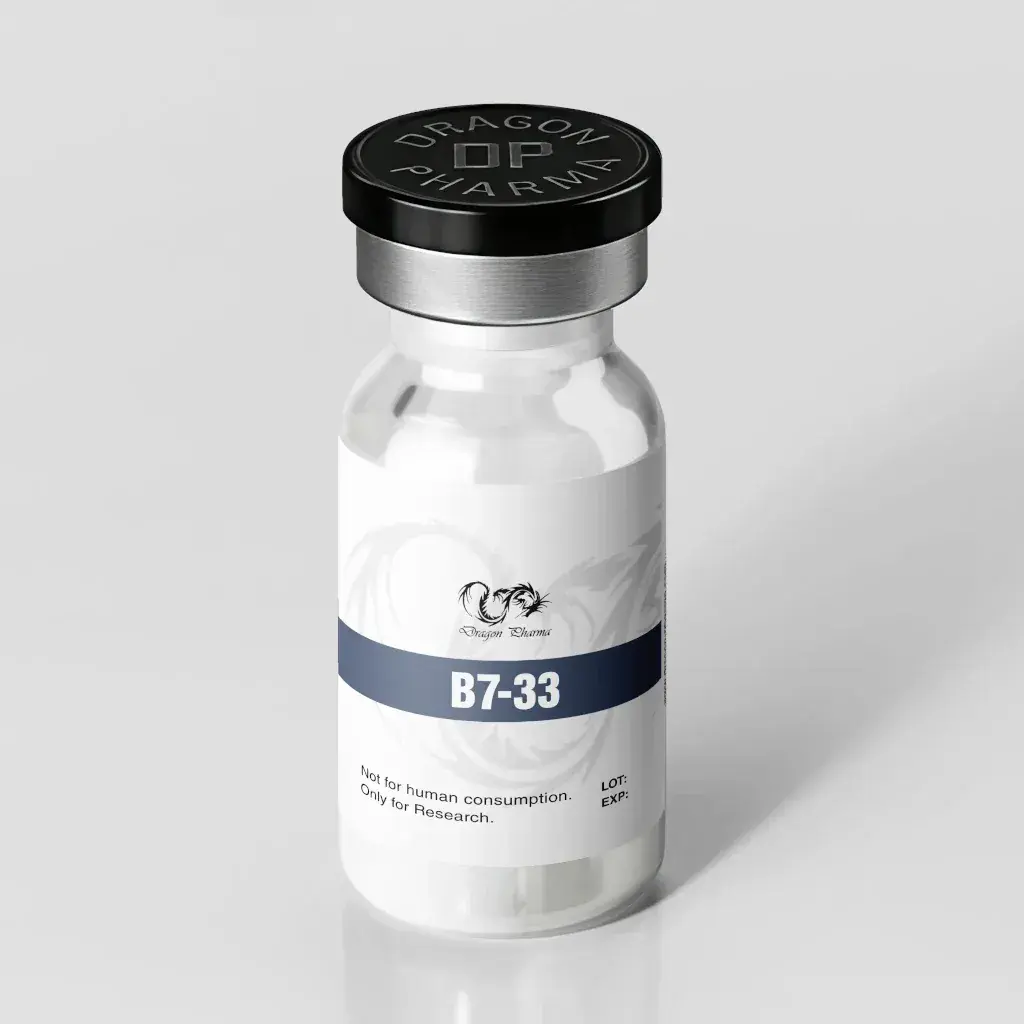
B7-33 10 mg
Main Image

B7-33 10 mg

Steroids Dragon Pharma Peptides

$70.00

Dragon Pharma B7-33 10 mg – Selective RXFP1 Agonist for Anti-Fibrotic Research

✔ Synthetic relaxin-2 B-chain analog ✔ Functionally selective RXFP1 agonist ✔ Studied for anti-fibrotic properties ✔ USA domestic shipping available

Dragon Pharma B7-33 10 mg is a synthetic, single-chain peptide derived from the B-chain of human relaxin-2 (H2 relaxin). This peptide acts as a functionally selective agonist for the relaxin family peptide receptor 1 (RXFP1), representing a targeted tool for research into fibrosis, cardiovascular function, and tissue remodeling.

Each vial contains 10 mg of lyophilized B7-33 in a 2 mL format, requiring reconstitution with bacteriostatic water before use. B7-33 has been developed as a more stable and selective alternative to full-length relaxin-2, offering researchers a refined compound for preclinical investigations. For related research compounds, explore our peptides category and specifically SS-31 50 mg for mitochondrial function studies.

What Makes B7-33 Valuable in Research?

B7-33 retains the key structural elements responsible for RXFP1 activation while eliminating domains that may contribute to off-target effects or rapid clearance. Its functionally selective profile allows researchers to investigate RXFP1-mediated signaling pathways with improved specificity compared to native relaxin-2.

The peptide has demonstrated promising preclinical potential in models of tissue fibrosis, cardiac remodeling, and wound healing. By activating RXFP1, B7-33 triggers downstream signaling cascades involving cAMP, MAPK, and PI3K pathways, which are linked to anti-fibrotic, anti-inflammatory, and vasoprotective effects. For researchers investigating peptide-based interventions, TB 500 offers complementary insights into tissue repair mechanisms.

Current research surrounding B7-33 is available through the PubMed database, where investigators can access peer-reviewed studies on its pharmacokinetics and preclinical applications.

Key Research Applications for Dragon Pharma B7-33

  • ✔ Investigation of RXFP1-mediated anti-fibrotic mechanisms
  • ✔ Cardioprotection and cardiac remodeling studies
  • ✔ Wound healing and tissue regeneration research
  • ✔ Evaluation of relaxin-2 signaling pathways
  • ✔ Preclinical models of fibrotic diseases
For Research Purposes Only

B7-33 10 mg is intended for research use only and is not approved for human consumption. Proper handling, reconstitution, and experimental protocols are essential for reliable results. For studies exploring systemic inflammation, Thymosin Alpha-1 provides additional research avenues.
Dispatched within 24 hours in plain, discreet packaging.

Additional Information

Categories:
Brand: Dragon Pharma
Manufacturer: Dragon Pharma
Dosage Info: <div class="tab-pane fade" id="offer-tabbody--dosage-and-usage" role="tabpanel"> <section class="tab-panel" id="panel-usage"> <h2>Dosage &amp; Usage Guidelines</h2> <div class="info-card warning"> <p><strong>For research and laboratory use only.</strong> Dragon Pharma B7-33 10 mg is a synthetic peptide with a high degree of specificity for the RXFP1 receptor. Proper reconstitution, handling, and experimental design are essential for obtaining reliable data.</p> </div> <h3>Reconstitution Protocol</h3> <ul class="usage-highlights"> <li>✔ Use sterile bacteriostatic water for injection</li> <li>✔ Add appropriate volume to achieve desired concentration</li> <li>✔ Swirl gently to dissolve – do not shake vigorously</li> <li>✔ Store reconstituted solution at 2–8°C</li> </ul> <p>Reconstitute the lyophilized powder using bacteriostatic water to a concentration suitable for your research protocol. The 10 mg format allows for flexible dosing across a range of experimental models. Always use aseptic technique during preparation to maintain peptide integrity.</p> <h3>Typical Research Parameters</h3> <p>In research settings, B7-33 is typically administered via subcutaneous or intraperitoneal injection. Dosing schedules and concentrations vary widely depending on the experimental design, animal model, and specific research objectives.</p> <ul> <li>✔ Commonly used in studies evaluating anti-fibrotic effects</li> <li>✔ Often combined with cardiac function assessment protocols</li> <li>✔ Used to investigate RXFP1-mediated signaling pathways</li> <li>✔ Research models include wound healing and tissue repair</li> </ul> <h3>Factors to Consider in Research Protocols</h3> <ul> <li>Functionally selective agonist requires careful dose-response characterization</li> <li>Reconstitution stability is limited; prepare fresh solutions for each use</li> <li>Individual variation in response may be observed across subjects</li> <li>Storage conditions significantly impact peptide stability</li> </ul> <div class="info-card"> <p><strong>Research note:</strong> B7-33 offers targeted activation of RXFP1 with improved stability compared to full-length relaxin-2. Its functional selectivity profile provides an opportunity to dissect receptor signaling pathways with reduced off-target effects.</p> </div> </section> </div>
Reviews:
(0 customer reviews)

Technical Details

Peptide Type
Single-Chain Relaxin-2 Analogue
Peptide Sequence
VIKLSGRELVRAQIAISGMSTWSKRSL
Peptide Length
27 Amino Acids
Calculated Molecular Mass
2986.6 Da
Structural Format
Single-Chain Linear Peptide
Receptor Target
RXFP1
Signaling Profile
pERK1/2-Biased RXFP1 Agonist
Development Status
Experimental / Preclinical

Chat on WhatsApp